
How to Find Shark Teeth on Manasota Key
A practical guide to hunting fossilized shark teeth on Florida's Gulf Coast — where to look, when to go, and how to know what you've found.
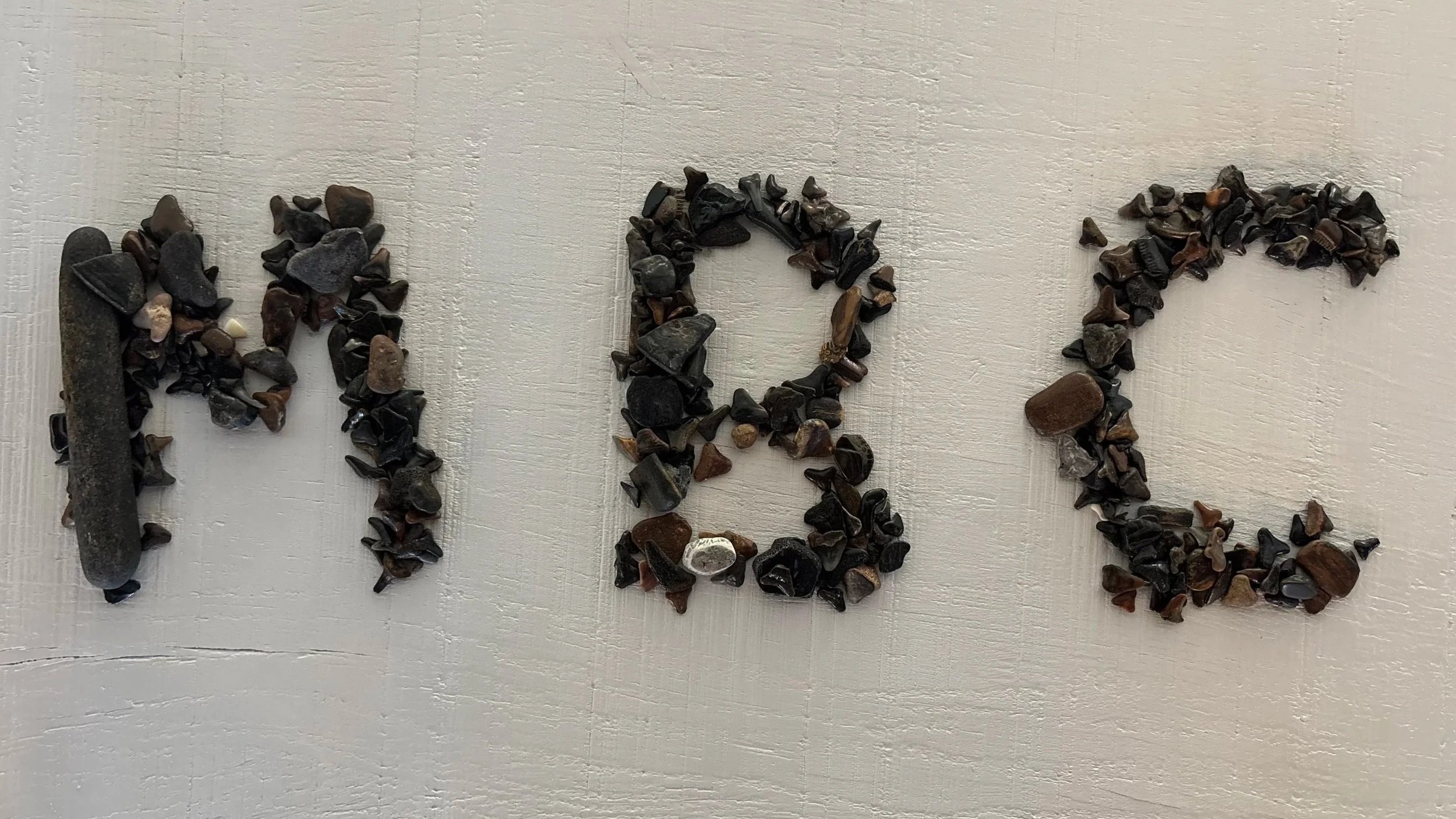
People come to Manasota Key for the beach. They stay bent over at the waterline for three hours because of the shark teeth.
It happens to almost everyone. You find one — small, black, unmistakably a tooth — and something switches on. An hour later you're still scanning, and you've stopped noticing the sunburn.
Here's how to be good at it.
Why This Stretch of Coast Has So Many
The short version: you're standing on top of an ancient seafloor.
Just offshore, the seabed exposes two geological formations — the Peace River Formation and the overlying Tamiami Formation — laid down when Florida was underwater. The Peace River Formation dates to roughly 13 to 8.5 million years ago in its lower reaches, with an upper unit around 5 million years old. The Tamiami Formation runs from about 4.9 million years ago up to roughly 2 million.
Over millions of years, sea levels rose and fell, ancient shorelines migrated, rivers cut channels, and storms churned everything. What survived that process was the hardest material in it — teeth. They concentrated into what geologists call lag deposits, sitting on the seafloor a short swim from where you're standing.
Waves and storms are still reworking those deposits and pushing material onto the beach. That's why the supply doesn't run out.
It's worth knowing how well-documented this is. In 2025, researchers published a study in Palaeontologia Electronica describing more than 10,000 fossil teeth representing over 45 species of sharks and rays, collected by divers in water 10 to 40 feet deep — in the stretch running south from Venice Inlet toward Manasota Key, within about three miles of shore.
That's not a general Florida statistic. That's the water off this beach.
One consequence worth appreciating: the deposit is what scientists call time-averaged. Two teeth you pick up ten feet apart can differ in age by more than five million years.
Why the Teeth Are Black
A living shark's teeth are white — built largely from hydroxyapatite, the same mineral family as your own tooth enamel.
The black ones on the beach have been buried in oxygen-poor sediment for millions of years, and during that time, mineral-rich groundwater worked into them. According to the Florida Museum of Natural History, the color change comes from iron, manganese, and other elements substituting into the structure at an atomic level.
Here's the detail most guides miss, and it's the one that helps you identify teeth: the root fossilizes differently than the crown. The root is porous and readily takes up minerals. The dense enameloid crown resists it. That's why so many teeth come out with a jet-black root and a crown that's gray, blue, or tan.
You'll also notice the sand here isn't the pure sugar-white of some Florida beaches. Look closely at the darker gravel — a lot of that is phosphate and fragments of fossilized bone eroding out of the same formation.
When you see black gravel, you're standing on the productive layer. That single observation will do more for you than any tool.
What You'll Actually Find
The most commonly recovered teeth in the 2025 study were tiger shark and requiem sharks — the Carcharhinus group, which includes bull and lemon sharks. Also present: shortfin mako, great white, and an extinct broad-toothed mako called Carcharodon hastalis.
Keep an eye out for Hemipristis serra, the snaggletooth shark. It's extinct, it's locally common, and it's the most striking thing most people find — curved, and edged with serrations so coarse they look hand-cut. If you find one, you'll know.
About megalodon
Yes, megalodon teeth are here. The 2025 study documented plenty of them.
But be realistic about it. That same research found small megalodon teeth far more often than large ones, and most beach finds anywhere on this coast are under an inch. The hand-sized specimens that go viral are genuinely rare, and they usually come from divers working the deeper deposits.
People do find them. A visitor found a hand-sized megalodon tooth on Manasota Key in late 2023, and it made national news precisely because that outcome is unusual.
Hunt for the small stuff. Let the big one be a surprise.
For what it's worth, a 2025 study by 29 researchers revised megalodon's maximum size upward to roughly 80 feet — and concluded it was built slender, more like a lemon shark than the stocky great white everyone pictures.
When to Go
Morning, at low tide, is the answer most of the time. Early, before the beach fills and the obvious finds get picked over.
Beyond that, there are really two different hunts, and they call for opposite conditions:
After a storm or in rough surf. Heavy wave action churns deeper material up onto the beach. The water will be murky, so don't bother wading — work the dry sand and the wrack line where the waves have been dumping shell.
On flat water at a strong low tide. When the Gulf lies down, and the tide drops hard, you can wade the shallows and sift, or snorkel just off the beach and read the bottom. Look for depressions and troughs — the same physics that sorts teeth on the beach sorts them underwater.
Seasonally, Florida State Parks notes that shelling in this area is best during the winter months, which tracks with more frequent fronts and rougher water.
Where to Look on the Beach
Shark teeth are dense. They're heavier than sand, and slightly heavier than most shell. Everything follows from that.
Hunt the shell line, not the clean sand. Waves sort material by weight, so teeth end up with the heavy fraction — the broken shell, the gravel, the dark grit. Local hunters call a good accumulation a wash.
Work where the waves first curl, ankle to knee deep. Material is in constant motion there and gets re-sorted every few seconds.
Follow the black gravel. It's the single most reliable indicator on the beach.
Walk farther than everyone else. Access points get picked clean daily. Fifteen minutes of walking is the highest-return effort available.
What to Bring
You need almost nothing. Some people find more teeth with their eyes than anyone does with equipment.
If you want a tool, the local one is a "Venice snow shovel" — a long-handled scoop with a screened basket, named for a state that has never needed the original. Look for quarter-inch mesh; anything larger loses the small teeth, which is most of them. Beach shops and bait shops in the area carry them.
A kitchen colander works. So does a child's sand sifter.
Wear water shoes, not flip-flops. Parts of this coastline have exposed rock, and you'll be standing in moving water looking down.
How to Tell a Tooth From a Shell
One test settles it: a glossy, dense crown attached to a rougher, porous root.
No shell fragment and no rock chip reproduces that two-material structure. Once you've seen it, you can't unsee it.
Other tells:
It feels heavy for its size. Mineral infill makes fossil teeth denser than they look.
The crown and root are often different colors — for the fossilization reasons above.
Serrations, on many species, along one or both edges.
It's black or dark gray, not white. A white tooth on this beach is almost certainly modern, and almost certainly not a shark's.
The most common false alarms are shell fragments, which fracture in curved layers rather than forming a solid blade; rock chips, which can be triangular but have no crown-to-root transition; and stingray dental plates, which are genuinely common here — rays fossilize in the same deposits — but read flatter and less glossy than a shark tooth.
And know that they're smaller than you're expecting. Most are well under an inch.
The Rules
This trips people up, so here it is plainly.
Florida requires a permit to collect vertebrate fossils from state land — but shark and ray teeth are specifically exempt. The Florida Museum of Natural History and the Florida Department of Environmental Protection both state it directly: shark teeth, ray teeth, invertebrate fossils, and plant fossils may be collected and kept for personal use, permit-free. Other vertebrate fossils are protected, and their sites along with them.
In state parks, there's a narrower carve-out. Florida State Parks permits collecting shark teeth, empty seashells, and sea glass found between the waterline and the toe of the dunes. That's the whole allowance. Digging into dunes is prohibited, as is removing rocks, driftwood, bones, and other materials. Live shells and live sand dollars stay where they are.
Digging to expose fresh sediment is discouraged or prohibited on public land generally — it damages the beach, and it isn't necessary. The waves do that work for free.
Where to Hunt on Manasota Key
Manasota Key runs roughly north to south, quiet residential at the north end and more developed toward Englewood in the south.
Blind Pass Beach (also called Middle Beach), at 6725 Manasota Key Road, is the one local experts favor. Roughly 3,000 feet of Gulf-to-bay frontage, free parking across the road, restrooms and showers.
Manasota Beach, at the north end, is productive and the site of that 2023 megalodon find.
Stump Pass Beach State Park, at the southern tip, has about a mile of beach where shells and teeth wash in. $3 per vehicle. Walk south — the finds improve with distance from the parking lot.
Englewood Beach is the most popular and, predictably, the most picked over.
And if you're willing to work for it, Don Pedro Island State Park is boat-access-only, which is exactly why people who are serious about this go there.
The Advantage of Staying Here
Every public access point on this key gets combed daily. The teeth are still there — the Gulf restocks the beach constantly — but you're following a lot of people.
Manasota Beach Club has 300 feet of private Gulf beach. Guests and members can be out at first light on a falling tide with the shell line to themselves, which is precisely the condition every guide tells you to look for and almost nobody actually gets.
Come down early. Bring coffee from the Clubhouse. Head to the shore and start walking.
